
Starting a scheme
Your village needs lifts.
You are thinking of organising them.
It is a bigger job than it looks, and most people who take it on have never done anything like it before. Via exists to make the second half of it — the admin — mostly disappear.

Being straight with you
There is a lot to do to start a scheme
You have to decide how the scheme will work, what to charge, and how to stay on the right side of the rules that apply to volunteer transport.
Then you need drivers, and probably someone to help coordinate and keep the books. Getting all of those people pointed the same way is the part nobody warns you about.
None of that is a reason not to do it. Hundreds of schemes have, and they nearly all started with one person deciding to.
What you get on day one
You are not starting from a blank page
Via is built around how the best-run volunteer schemes in the UK actually work, so a lot of the thinking is already done.
Screenshot of the in-app guides to come
Templates for the paperwork
You are not writing a constitution from a blank page. Via comes with templates for the documents a new scheme needs, and step-by-step guidance built into the app itself, so the help is on the screen you are already looking at.
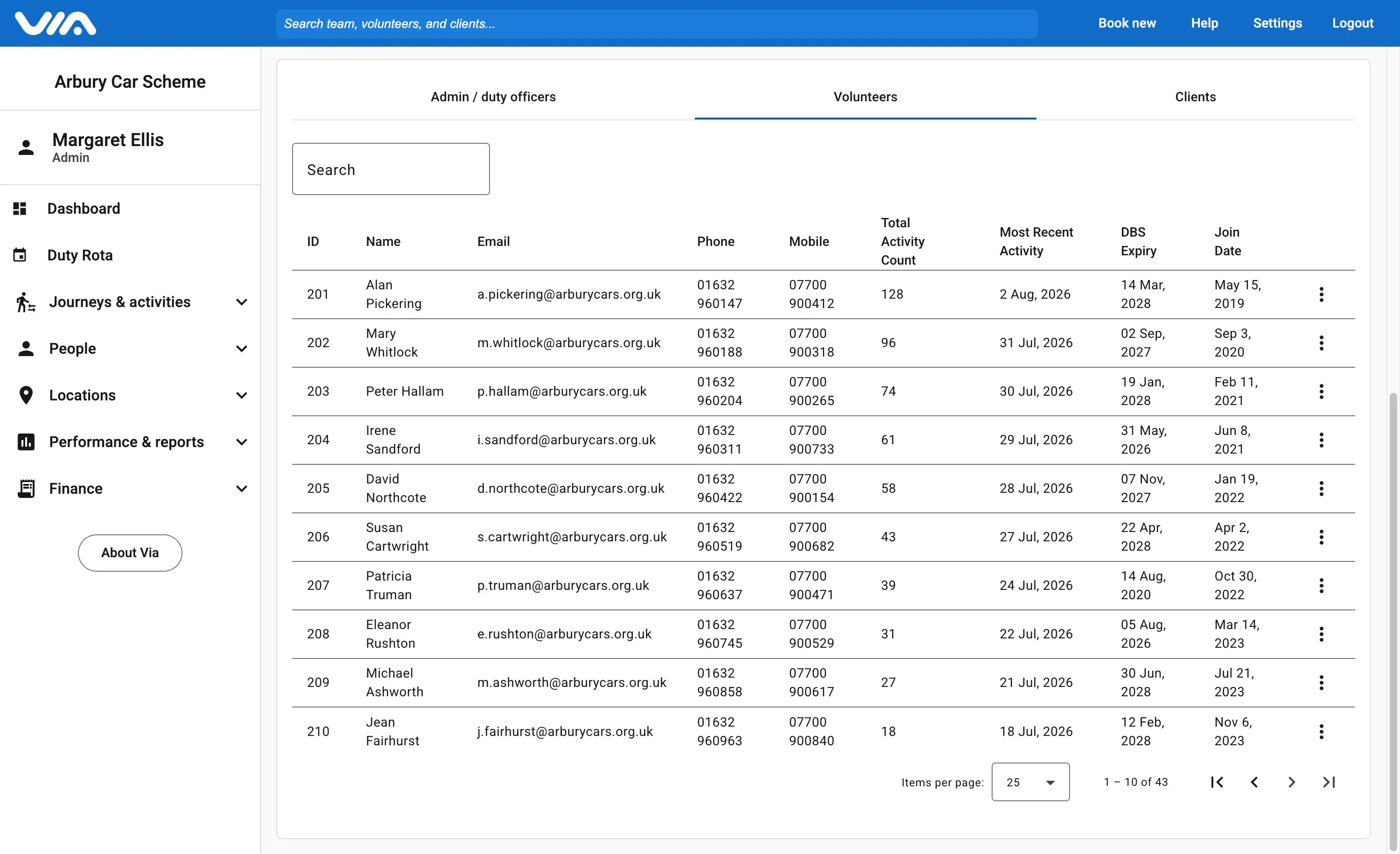
Help finding volunteers
Most schemes start with three or four drivers found by word of mouth. Via holds each volunteer's availability, the areas they will cover and the checks they have completed, so you always know who you can actually ask.
Screenshot of scheme reports to come
A hand with funding
Parish and county councils fund a great many schemes, and both want evidence. Via's reports show how many journeys you made, for whom and where — which is exactly the case a funding application has to make.
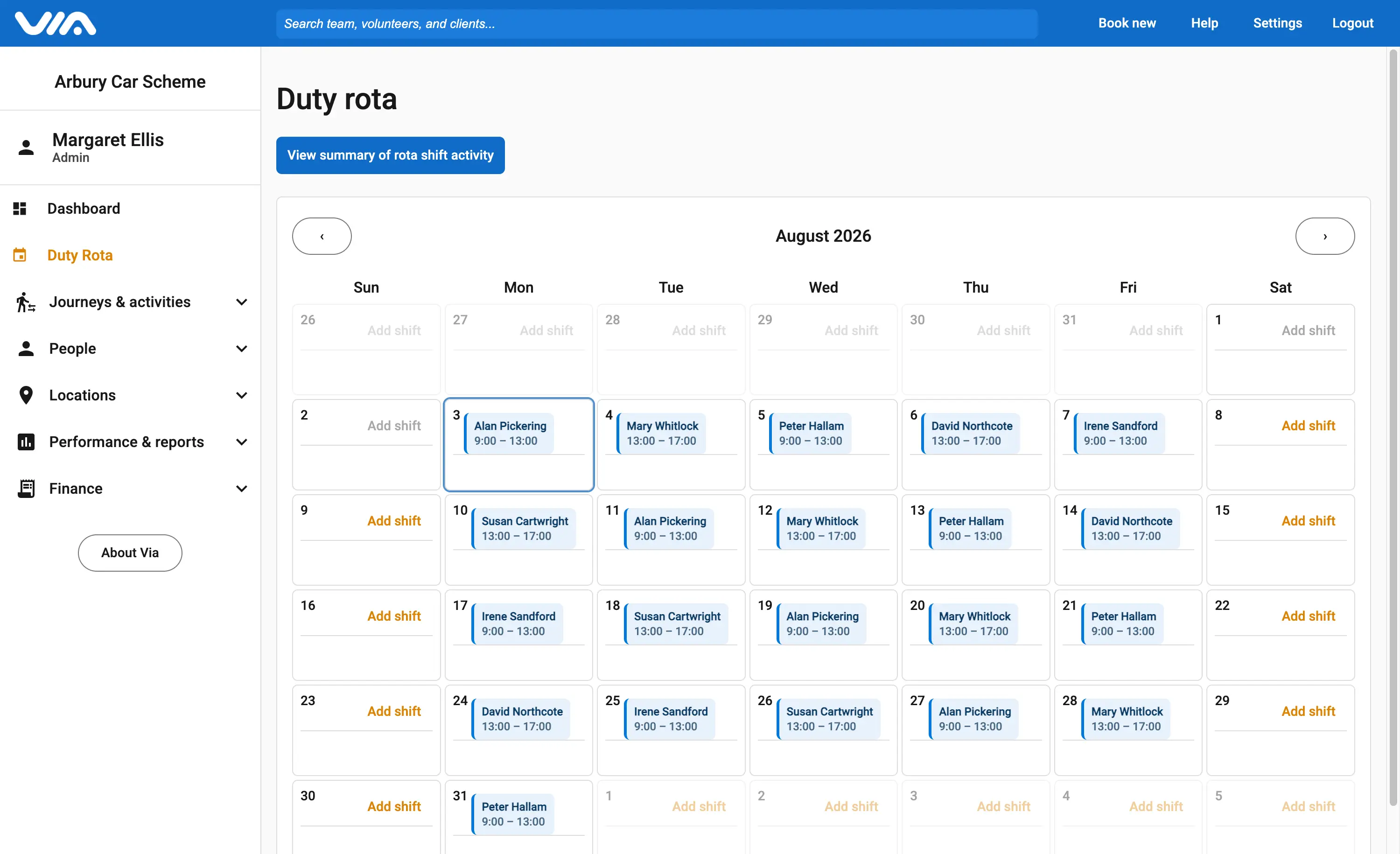
Journey requests, handled
Take the request as you always have, and type it straight in. Via suggests volunteers who are free and nearby, and the duty rota shows at a glance who is covering today and who still needs asking.
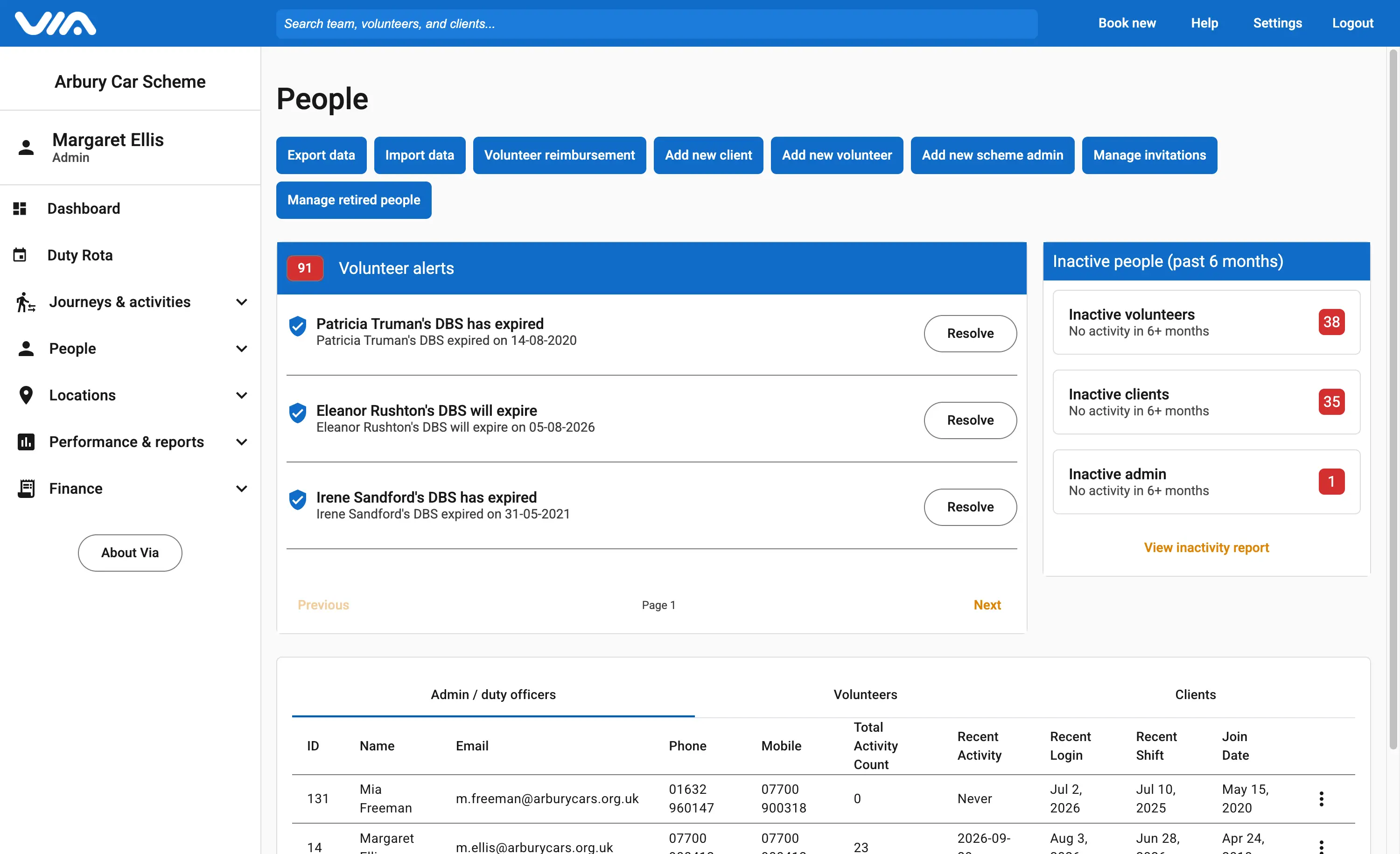
Driver records that chase themselves
Every driver's insurance, MOT and DBS dates sit against their record, along with their availability and holidays. Via warns you before anything expires, so none of it depends on somebody remembering.
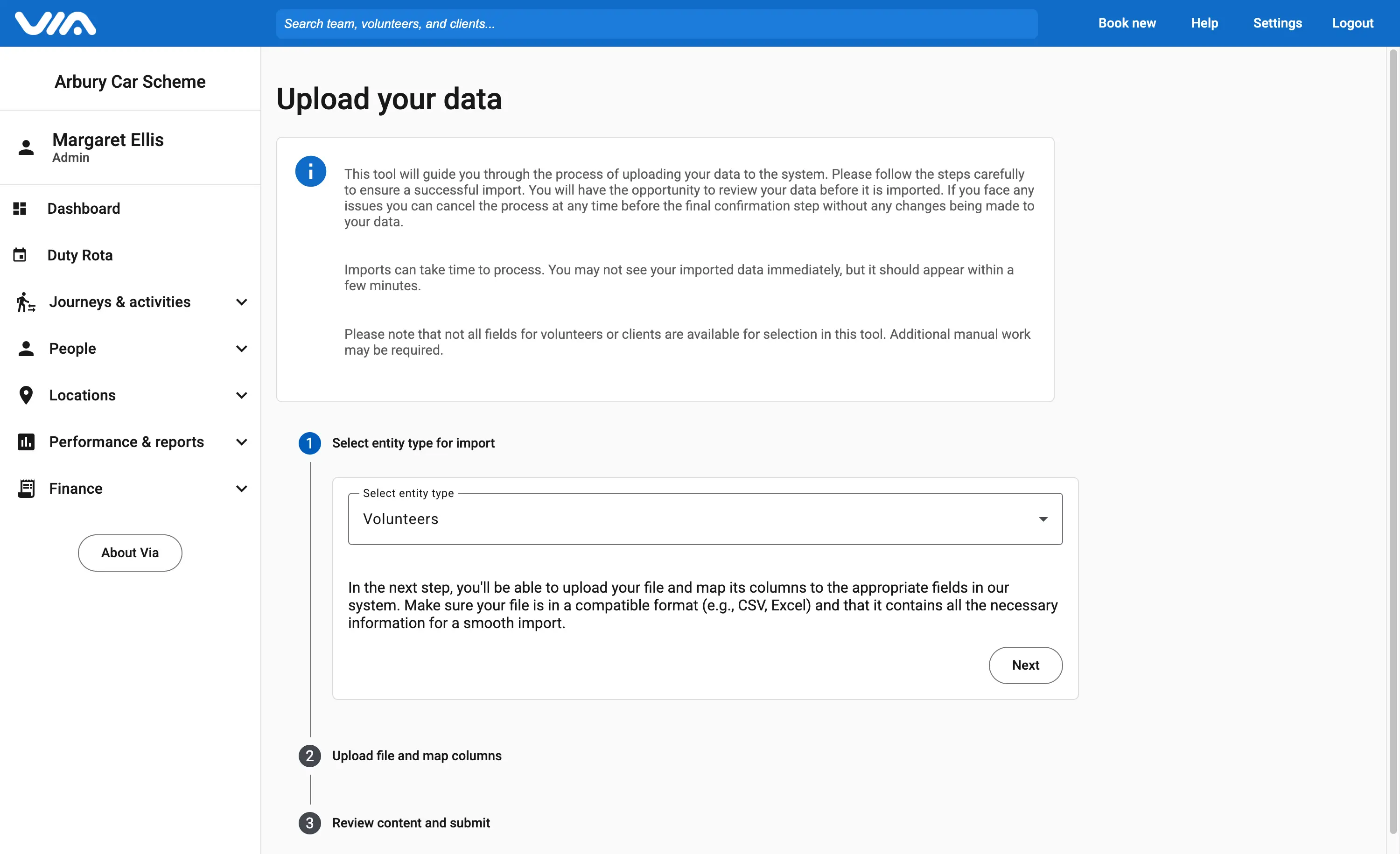
Bring your existing records with you
If you have already started — a spreadsheet, a card file, a notebook — the import tool walks you through three steps and maps your columns to Via's fields. It takes about a minute to set going, and we will do it with you on the phone if you would rather.
Getting going
Four steps, and none of them are technical
Work out how your scheme will run
Who you will carry, what you will ask them to contribute, and how far you will travel. Our templates cover the decisions you need to make.
Find a few drivers
You do not need many to begin. Most schemes start with three or four people and a village noticeboard.
Set your scheme up in Via
Add your drivers and passengers as you go. It is free while you are small, and free for everyone for the first 3 months.
Take your first booking
Type the request in, let Via suggest a driver, and send it. That is the whole job.
What scheme organisers say about Via

Via puts everything into one place and takes the guesswork out of running our scheme.
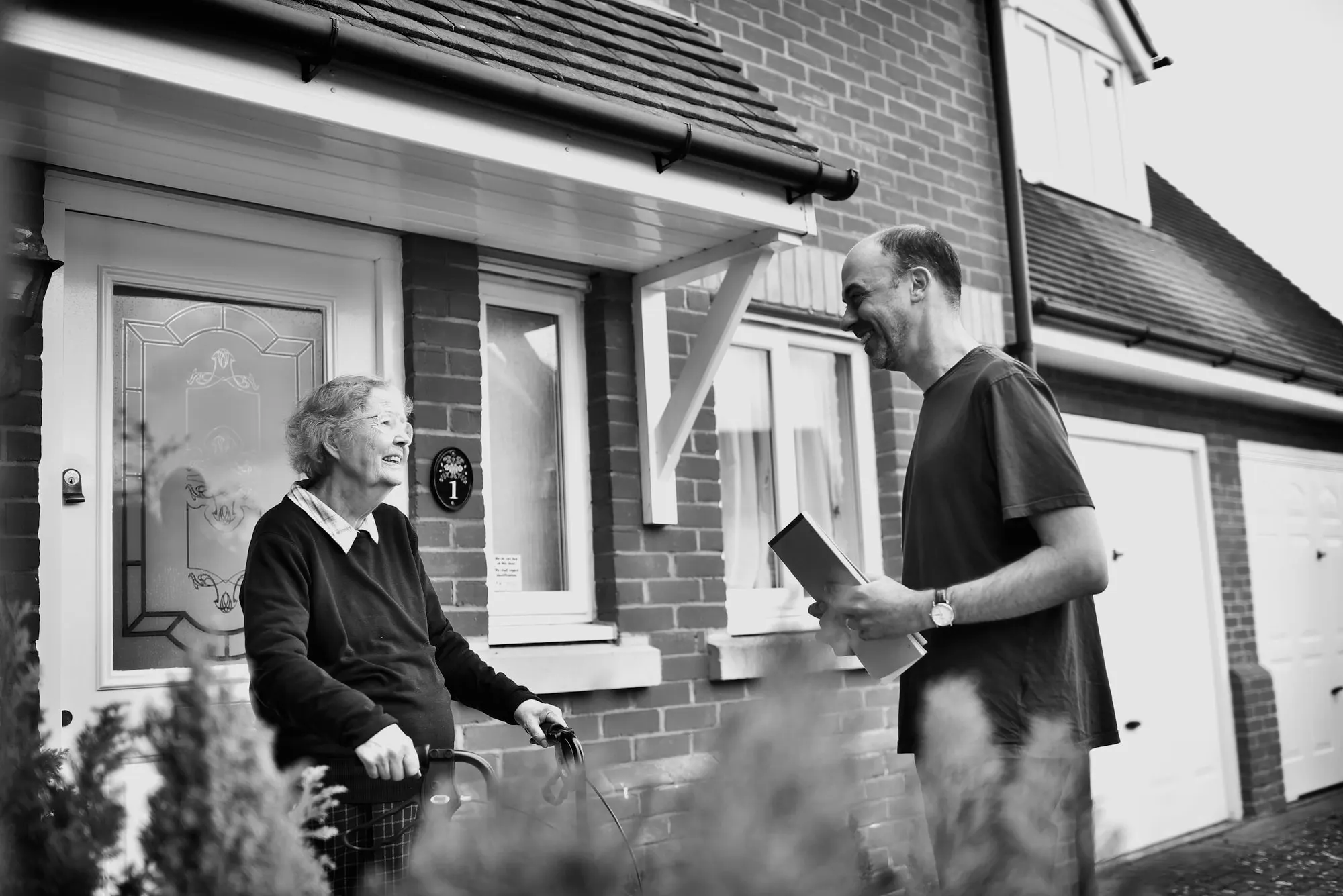
I am so pleased to see our scheme up and running. It is largely due to the ease of using your software that we have achieved as much as we have so quickly.
1 of 2
Free while you are finding your feet
Every scheme gets 3 months free, and it stays free under 100 journeys a year. No card, and nobody will ring you to sell anything.
Or call 01223 969459. Monday to Friday, 9am to 5pm.